
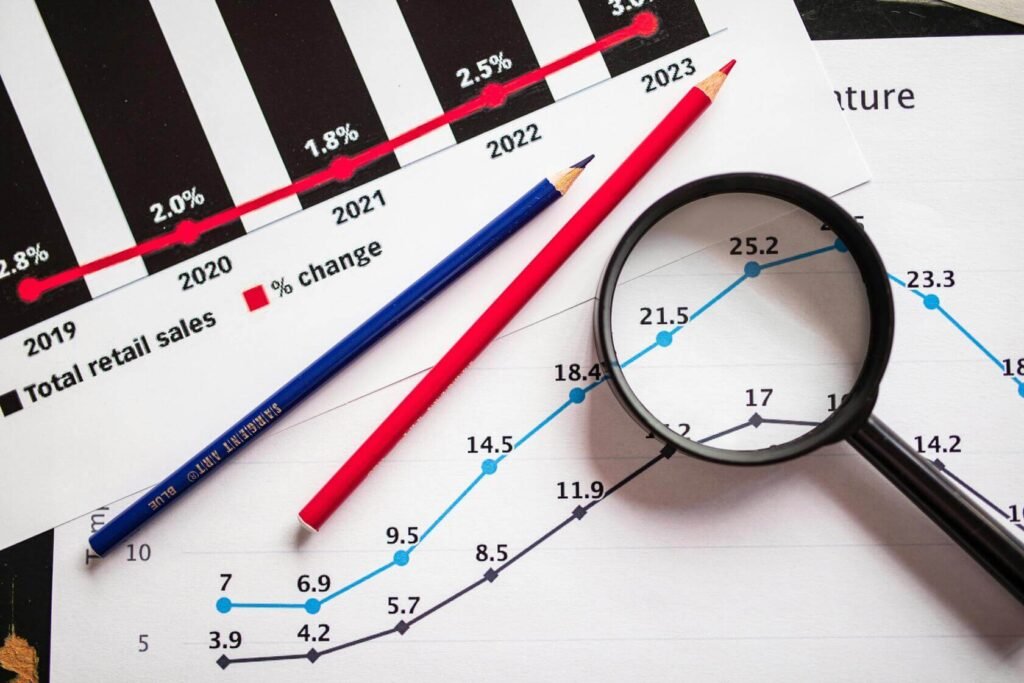
Profitable on Paper. Broke in Reality. Why UK Businesses Are Failing in 2026.
Published by Dynamic Business Consultancy | May 2026
—
In April 2026 alone, 2,085 UK companies collapsed. The highest monthly total since June 2024.
Here is the part that most business owners do not talk about: the majority of them did not see it coming.
Not because the warning signs were not there. But because nobody was reading them.
The most dangerous financial position a UK business can be in is not losing money. It is making money — on paper — while the cash slowly runs out underneath.
—
The Financial Paradox Destroying UK Businesses Right Now
Ask most business owners whether their company is in financial trouble and the instinctive answer is: “We’re busy. Revenue is up. We’re fine.”
Busy and profitable are not the same thing.
Revenue growing and cash flow healthy are not the same thing.
Invoiced and paid are not the same thing.
Recent research from the Chartered Institute of Credit Management found that 82% of UK SMEs have faced cash flow difficulties — yet the same businesses were generating revenue, serving clients, and by most surface measures appearing to trade normally.
Only 1.5% of UK business owners surveyed felt their company was at severe risk of insolvency — yet the Insolvency Service data tells a completely different story. The gap between how business owners perceive their financial position and the reality of it is one of the most consistent and costly patterns in UK business in 2026.
This is not a criticism. It is a structural problem. Most growing UK businesses are run by people who are brilliant at their craft — whether that is caring for residents, managing construction projects, placing candidates, or building products. They did not build their business to spend their time reading financial reports.
And that is precisely why so many are blindsided when the problem finally becomes undeniable.
—
5 Silent Problems Causing UK Business Failures in 2026
The problem is not always one dramatic event. More often it is a build-up of pressures — cash flow, arrears, tax pressure, and creditor fatigue that leave too little room to recover.
Silent problem 1 — Cost creep that outpaces UK revenue growth
Revenue grows 15% in a year. Costs grow 22%. The business feels busier than ever. The bank account gets tighter every quarter. By the time the gap is obvious it is already a crisis.
The National Living Wage increase, rising employer National Insurance contributions, higher energy costs, and supplier price increases have all combined in 2026 to squeeze UK SME margins from multiple directions simultaneously. Most business owners know costs are rising. They do not know by how much relative to revenue — because nobody is producing a monthly P&L that shows the comparison clearly.
Silent problem 2 — UK cash flow gaps the P&L doesn’t show
A business invoices £200,000 in March. £140,000 arrives in April. £40,000 arrives in May. £20,000 is disputed and never paid.
The P&L shows £200,000 revenue in March. The bank account tells a very different story.
Whilst a business may look highly profitable on paper, not managing cash flow correctly can lead to business risks including insolvency. Late payments are a specific and persistent UK problem — 62.6% of invoices are paid late, costing UK businesses £2 billion annually. For a growing SME relying on incoming cash to pay next month’s payroll, even a handful of late payments can create a crisis that the revenue numbers never predicted.
Silent problem 3 — UK tax liabilities building silently
VAT is due quarterly. Corporation tax builds throughout the year. PAYE accumulates every month. Each is a liability that exists whether or not you have set aside the money to cover it.
UK businesses that manage by bank balance — what’s in the account today — rather than by true financial position regularly discover at filing time that they owe HMRC significantly more than they have available. Compulsory liquidations rose 4% month-on-month in Q1 2026, indicating continued creditor pressure particularly from HMRC as tolerance for arrears tightens.
HMRC is no longer the patient creditor it was during the pandemic. Tax arrears that previously received forbearance are now triggering enforcement.
Silent problem 4 — Growth that destroys cash flow
A UK business wins a large new contract. To deliver it they hire staff, buy materials, invest in capacity. All of those costs are paid upfront. The revenue arrives 60, 90, 120 days later. During that gap the business is cash negative — not because it is failing but because it is growing.
Without a cash flow forecast that models this gap before the contract starts — the business can be technically profitable and simultaneously unable to pay its bills. This pattern accounts for a significant proportion of UK insolvencies among businesses that were genuinely growing.
Silent problem 5 — No UK business early warning system
Cash flow problems are cited most often, followed by weak demand and poor financial planning as the leading structural causes of UK business failure.
The consistent theme across all five silent problems is the same: they are entirely visible with the right financial infrastructure in place. A monthly management accounts pack — showing your P&L, cash position, debtor days, cost trends, and a 13-week cash flow forecast — would flag every single one of these before they become irreversible.
The UK businesses failing in 2026 are not failing because the information was unavailable. They are failing because nobody was looking at it monthly.
—
UK Business Early Warning Signs — Do Any of These Sound Familiar?
These are the signals we see consistently in UK businesses that are six to twelve months away from a serious financial problem:
Revenue feels strong but the bank account never seems to grow
You are regularly surprised by how much VAT or tax you owe at filing time
You have invoices outstanding over 60 days that you keep meaning to chase
You are not sure which part of the business is actually making money
You have not seen a P&L since your last year-end accounts
Cash is always tighter in certain months but you are not sure why
You made a significant hire or investment and the expected return has not materialised
If three or more of these describe your business right now — the problem is not yet a crisis. But it is building towards one.
The earlier you get financial visibility, the more options you have. The earlier you review your options, the more choices you usually have.
—
What Monthly Financial Visibility Looks Like for UK SMEs
It does not have to be complicated. For most growing UK SMEs the minimum viable financial infrastructure is:
A monthly P&L showing true profit after all costs
A 13-week rolling cash flow forecast showing when money arrives and when it leaves
A simple dashboard of 4–6 KPIs telling you whether the business is moving in the right direction
A quarterly review comparing actual performance against your expectations
That is it. Four things. None of them require a full-time finance director.
What they do require is someone who knows how to produce them accurately, interpret what they mean, and flag the early warning signs before they become emergencies.
Collaborate with Dynamic Business Consultancy for unparalleled success through expertise.
Copyright by DBC. All rights reserved.